Ideal Dough Weight for 16-Inch Pizza
Who hasn’t wondered if they’re using too much or too little dough when stretching out a big, beautiful 16-inch pizza? You roll out your dough, you top it, and then—surprise—it’s either paper thin or so thick it barely cooks through. Getting the dough weight right is the secret to a pizza that bakes up just how you like it, with the perfect balance of chew and crisp.
The good news is that you don’t have to guess. There’s a sweet spot for dough weight, and it depends on the style of pizza you want to eat. Let’s break down the numbers, the science, and a few pro tips to make sure your next 16-inch pizza comes out exactly the way you want.

What’s the Best Dough Weight for a 16-Inch Pizza?
The classic answer for a 16-inch pizza is about 400 to 420 grams of dough, or roughly 14 to 15 ounces. This is the weight most pizzerias use for a standard, classic crust. It gives you a pizza that’s sturdy enough to hold toppings but not so thick that it feels like bread.
Some sources suggest a lighter touch. Ooni, the popular pizza oven company, recommends just 330 grams for a 16-inch pizza. That’s closer to 11.6 ounces. This will give you a thinner, crispier base, perfect if you like your pizza with a little snap.
If you want to get really precise, you can use a dough density formula. The surface area of a 16-inch pizza is about 200.96 square inches. Multiply that by 0.0973106 ounces per square inch, and you get about 19.5 ounces, or 555 grams. That’s a pretty hefty dough ball, and it’s great for a thick, bready pizza.
Why Dough Weight Changes by Pizza Style
Not all 16-inch pizzas are created equal. The style of pizza you’re aiming for changes how much dough you’ll need.
For a classic New York-style pizza, you’ll want something in the middle. New York slices are known for their foldable, chewy crust. Most pros use around 300 to 310 grams for this style, which gives you a thin but not cracker-thin base.[5]
If you’re after a true thin crust, some pizza makers use as little as 290 grams (about 10¼ ounces). This is perfect if you want a pizza that’s all about the toppings, with just enough dough to hold everything together.
Go the other way, and you can use up to 555 grams for a thick, pan-style pizza. This will give you a crust that’s soft and pillowy on the inside, with a crispy edge.
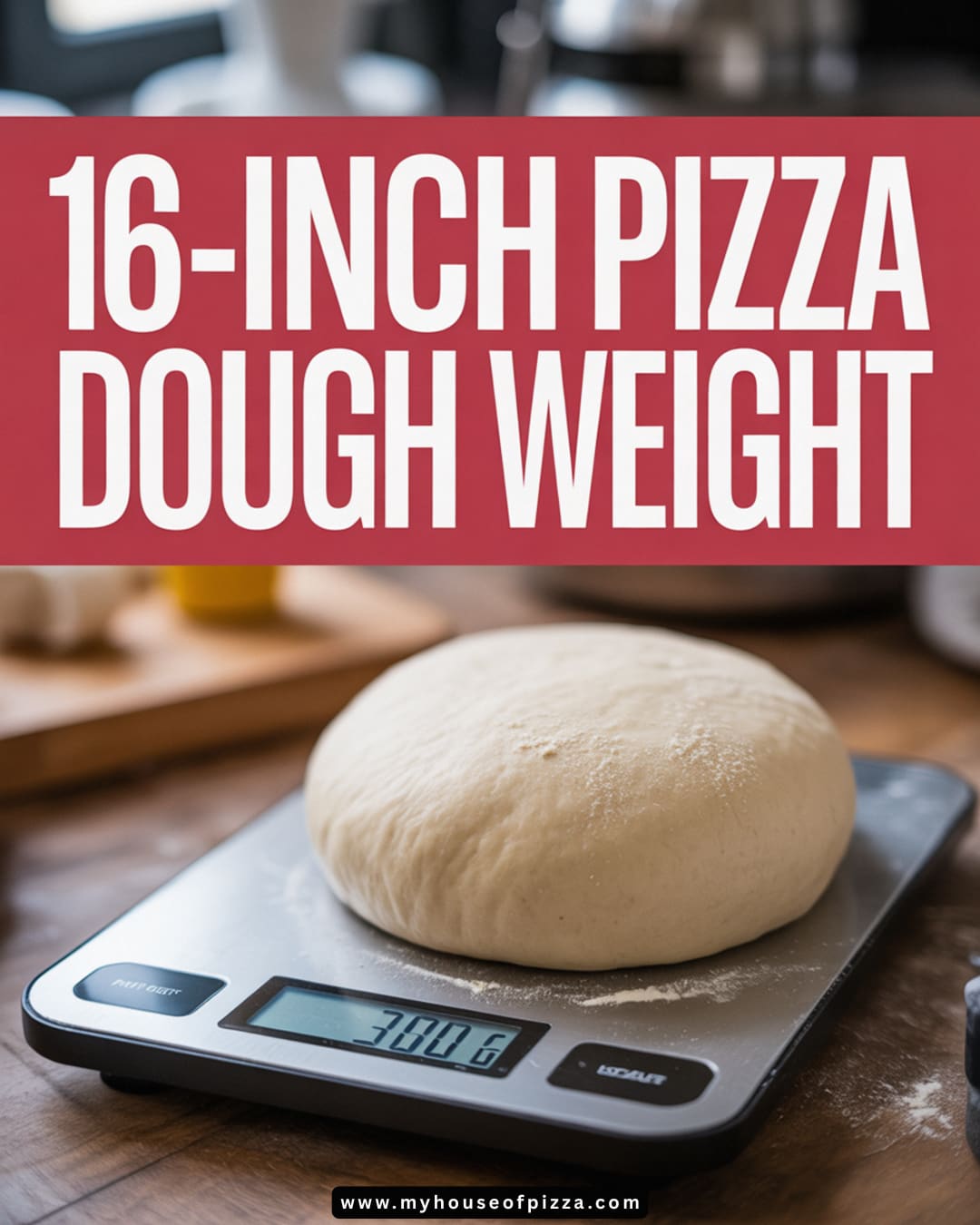
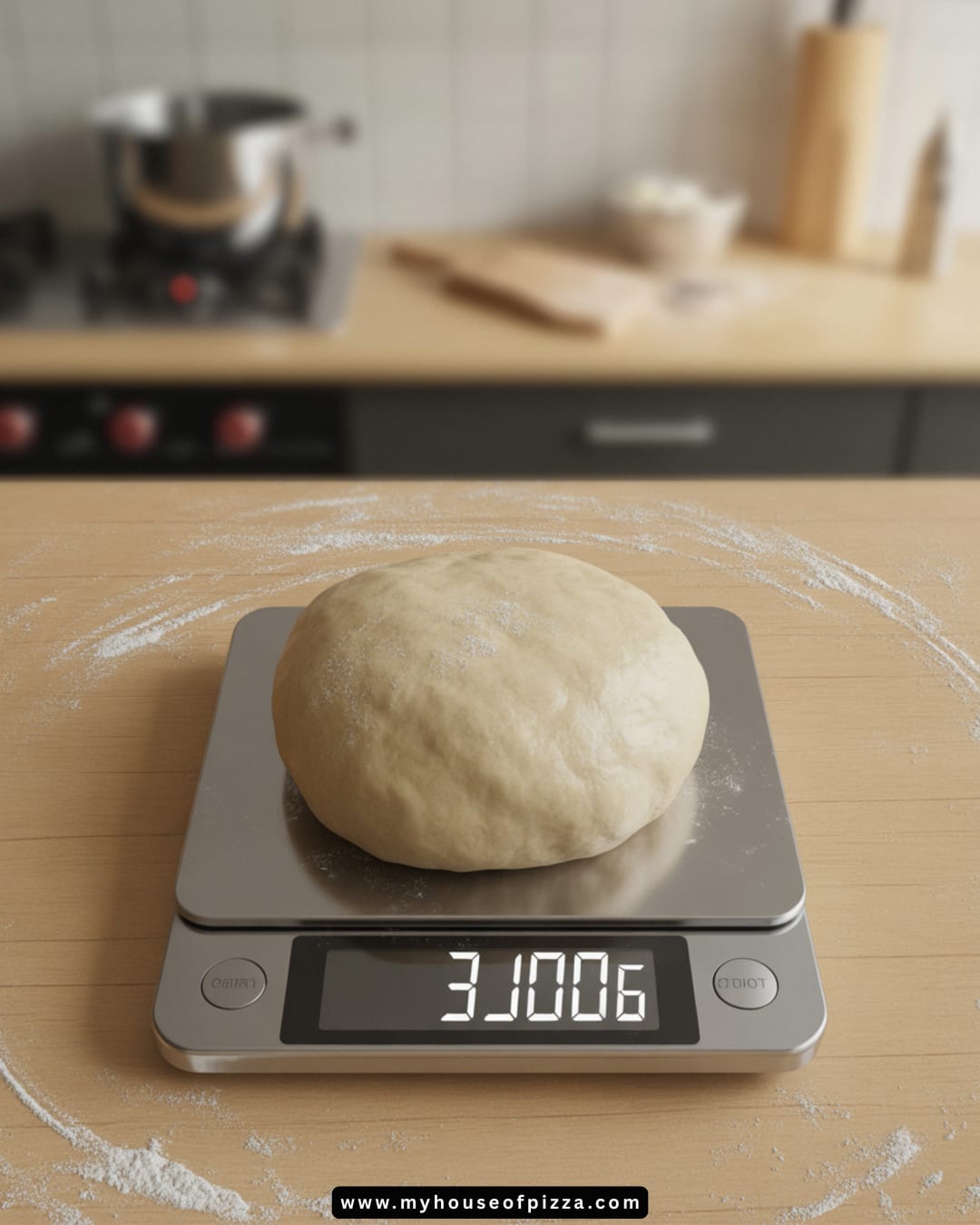 Overhead view of pizza dough balls on a digital kitchen scale reading 310g, set on a wooden counter with a dusting of flour.
Comparing Dough Weights for 16-Inch Pizza Styles
Here’s a quick look at how dough weights stack up for different 16-inch pizza styles, based on the latest recommendations and calculations.
| Pizza Style | Dough Weight (grams) | Dough Weight (ounces) | Crust Thickness | Source/Notes |
|---|---|---|---|---|
| Classic/Standard | 400-420 | 14-15 | Medium, chewy | Common pizzeria style |
| Ooni Recommendation | 330 | 11.6 | Thin, crisp | Ooni official recipe |
| Thin Crust | 290-310 | 10.25-11 | Very thin, crunchy | Used by some NY-style pizzaiolos |
| Thick Crust | 555 | 19.5 | Thick, bready | Based on dough density formula |
This table makes it easy to pick the right dough weight for the pizza you want. If you’re unsure, start in the middle and adjust up or down next time.
How to Pick the Right Dough Weight for Your Oven and Taste
Your home oven or pizza oven will also play a part in your dough decision. Hotter ovens can handle doughs, but they sometimes burn the outside before the inside is fully cooked. If you’re using a standard kitchen oven, you might want to turn down the temperature when cooking pan pizza and crank it up for thin crust.
Think about the toppings, too. Heavy toppings need a bit more dough to support them. If you’re going light on cheese and sauce, you can get away with less.
If you’re new to making pizza at home, try starting with about 400 grams for a 16-inch pizza. See how it bakes, then make notes for next time. Experimenting is part of the fun, and you’ll find your perfect ratio.
Tips for Measuring and Handling Dough
Always weigh your dough. Kitchen scales are cheap, and they make all the difference. Don’t just eyeball it—dough can be deceiving.
Let your dough rest and relax before you stretch it. This helps it spread out evenly and gives you a better crust. If the dough keeps snapping back, let it sit for another 10 minutes.
If you want to get really specific, or if you’re working with special ingredients like poolish or sourdough, you can use a pizza dough calculator. Check out this helpful pizza dough calculator to plug in your numbers and get a custom recipe.
Common Questions: Dough, Thickness, and More
How thin is too thin? If you go under 290 grams for a 16-inch pizza, you’re probably going to have trouble stretching the dough without holes. It’ll also bake up super crisp, almost cracker-like.
Can I use more dough for a stuffed crust? Yes, you’ll want to bump up the weight by 10 to 20 percent to make room for the extra cheese or fillings.
Does hydration matter? Higher hydration (more water in the dough) can make your crust airier and lighter, but it also makes it stickier and harder to handle. Most home bakers stick with 60 to 65 percent hydration for easy stretching.
What about gluten-free or alternative flours? These doughs can be trickier to work with. You might need a little more dough to get the same coverage, since they don’t stretch as much.
Getting the dough weight right for a 16-inch pizza is all about balancing the style, the oven, and your own taste. Start with the numbers above, and tweak until you find your own perfect slice.